
VISION
*
VISION *
Southern California
Founded, 1976
____________________
18 skateboards in collection
Overview
Vision became one of the loudest and most visible skateboard brands of the 1980s, combining a serious skate team with aggressive branding, fashion, unusual graphics and a willingness to experiment with board design.
Founded by Brad Dorfman in Southern California, Vision expanded well beyond decks during the decade. Vision Street Wear turned the company’s bold square logo, clothing and footwear into a highly recognizable part of skate culture, while riders such as Mark Gonzales gave the skateboard side real credibility.
The boards themselves reflected that same willingness to stand out. Vision produced everything from heavily shaped decks and strange graphics to the Psycho Stick and, by 1989, the Double Vision — an early double-kick design that anticipated the more symmetrical direction skateboards would soon take.
Vision could be commercial, loud and sometimes excessive, but it was also genuinely experimental. That combination made it one of the defining visual presences of late-1980s skateboarding.
-
Vision was just everywhere in the late ’80s. The skateboards and Vision Street Wear almost seemed to exist side by side. I don’t think of one without the other.
I wore some of the clothes myself. I had a shirt and pants covered in this crushed-together mix of barbed wire, lettering and spray-painted-looking graphics, and I had a pair of turquoise Vision Street Wear shoes. The big square Vision logo was impossible to miss. Some of the clothing was great and some of it could get a little overdone, but that was part of the period too. Skateboarders wanted to look like skateboarders, and Vision gave you a very obvious way to do that.
The shoes were also trying to solve real skating problems. We constantly wore holes through the toes and the ollie area and patched them with duct tape. Vision reinforced those spots with rubber. I remember thinking the front of the shoe looked kind of clunky, almost like the side of a trash can, but I wore them anyway.
The boards could be just as loud and strange. Vision had some really unusual shapes — big noses, hips, blunt ends and odd outlines. The Grigley boards were interesting, Johnee Kop’s 1989 Alien was completely wild, and Marty Jimenez had some great comic-book-like graphics. Even the older Vision pigs could get strange with all the different prints and finishes.
The Psycho Stick was one of those boards that seemed to be everywhere too. It had a good shape, but for whatever reason, in the scene around me it picked up a little bit of a poser reputation. That may not have been fair, but that is how I remember it.
I personally rode one Vision deck, a full-size Ken Park on a dark blue stain. My memories of that board are oddly vague compared with some of the others I owned, but I remember liking the way it felt. I was choosing boards largely by what worked under my feet, and I think the fuller shape and larger nose fit the ramp skating I was moving toward.
Then there was the Double Vision. My friend Rick showed up at my half-pipe with one in 1989, and it looked bizarre. Both ends looked more like tails than a nose and tail, and the whole thing still had the bulky proportions of an ’80s deck. It looked almost like two kicktails had been joined together into one big plank. I didn’t want one, but it was fascinating to watch him ride it back and forth on the ramp. It seemed gimmicky, but there was clearly an idea there that skateboarding had not completely caught up with yet.
And then there was Mark Gonzales. It is hard for me to think about Vision without thinking about him, even though I never liked the face graphic very much when it was new. It just didn’t appeal to me visually. I was much more attracted to some of the stranger graphics Vision was doing. Years later, of course, I came to appreciate what those early Gonz boards represented, and I’m very happy to have a beautiful example now. My taste at the time and what later became historically important were not always the same thing.
Vision was commercial and extremely popular, but I don’t remember that automatically making it feel illegitimate. Skateboarding was getting bigger, and most of us were excited that it was getting out there. Vision had enough serious riders and enough genuinely strange ideas to back up all the branding.
Looking back, that combination is probably what defines Vision for me: huge visibility, fashion, odd graphics, experimental shapes and ideas that sometimes looked awkward before the rest of skateboarding caught up with them.
TEAM
1983
Leopard (Animal Skin Series)
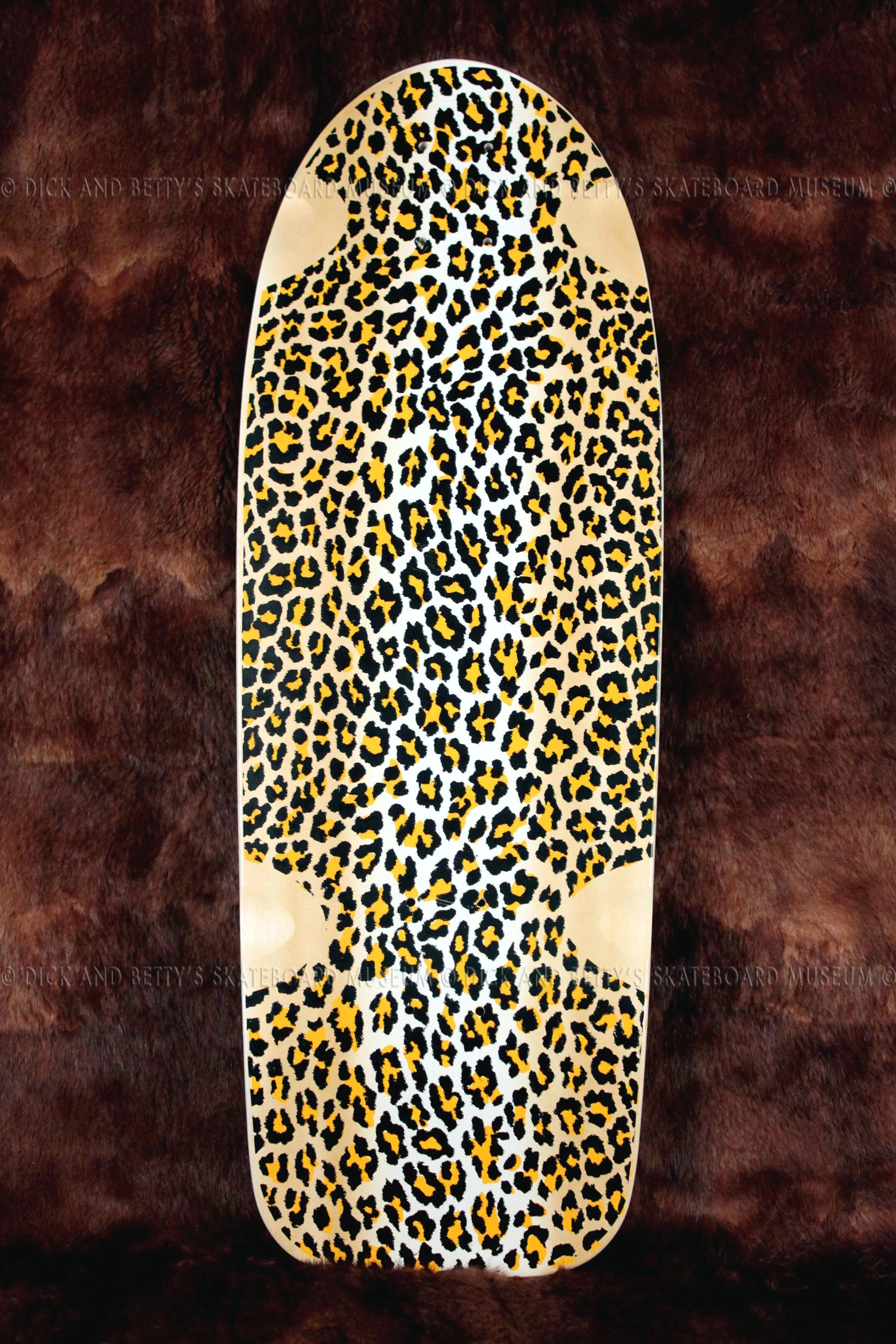
TEAM
1983
Leopard (White/Gold Fade)
MARK ROGOWSKI
1984
Disposable: Bible
TEAM
1986
Psycho Stick mini

MARK GONZALES
1986
Face
TEAM
1987
Boneyard
TEAM
1988
Ripper II
MARK GONZALES
1988
Fat Face
JOHN GRIGLEY
1988
II mini
JOHN GRIGLEY
1988
II mini in Silver.
MARTY JIMENEZ
1988
Jinx II - Bat
MARK ROGOWSKI
1988
Swirl II Mini (Used)
TEAM
1989
Double Vision
JOHNEE KOP
1989
Kop II - Alien
KEN PARK
1989
Wizard mini
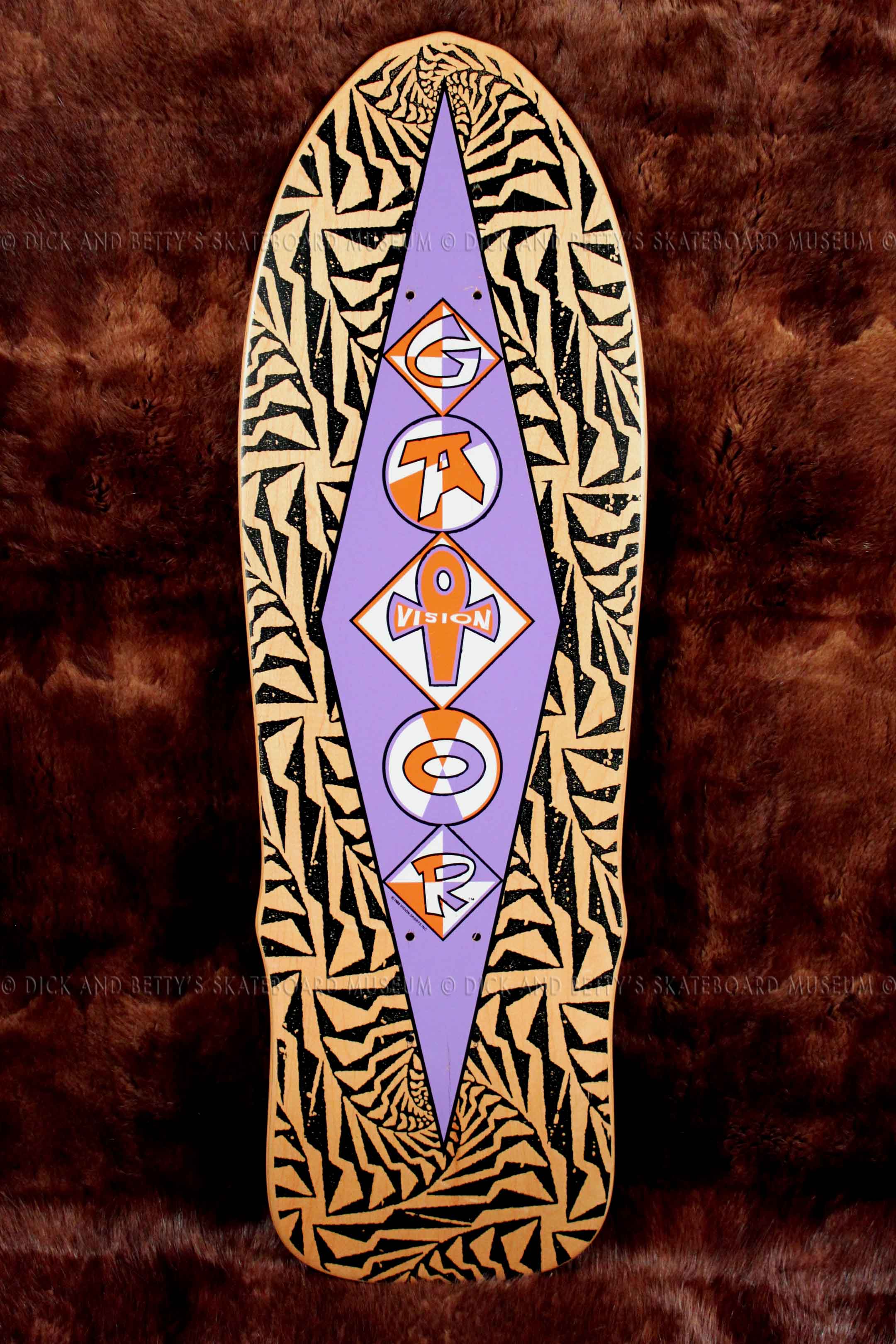
MARK ROGOWSKI
1989
Diamond
MARK ROGOWSKI
1990
Street Scene
BUCK SMITH
1992
Working the Corner II